




The National Debt Grew by $1 Trillion in Just Six Months

On March 15, 2018, the federal government passed an unfortunate milestone: $21 trillion dollars in gross federal debt.
Gross federal debt has grown by $5 trillion in just the last five years—from $16 trillion at the end of fiscal year 2012 to $21 trillion today. More than 80 percent of that growth has come from debt held by the public. It took just six months to add on the most recent trillion dollars.
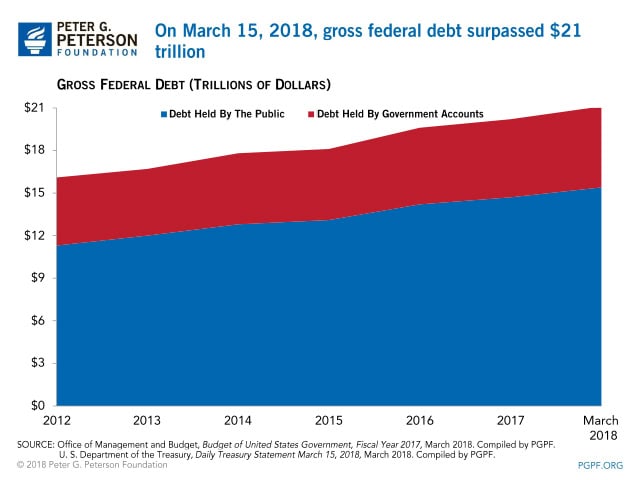
The growth of our debt stems from a fundamental imbalance between spending and revenues. Growth in spending — driven by an aging population, rising healthcare costs, and mounting interest payments — is outstripping collections of taxes to pay for it. As a result, the national debt is on an unsustainable long-term trajectory that will undermine economic opportunities for individuals and families in the future.
As Foundation CEO Michael Peterson noted, this trend is especially troubling because our fiscal outlook has only begun to reflect the effects of fiscally irresponsible tax and spending legislation that has been enacted in recent months. During a time of low unemployment and economic expansion, now is the time to get the national debt under control — but lawmakers have been moving in the wrong direction.
Image credit: Photo by Alex Neill/Getty Images
Further Reading

The National Debt Can Crowd Out Investments in the Economy — Here’s How
Large amounts of federal debt could “crowd out” investments by the private sector, making the economy less productive and stunting wage growth.

The Fed Held Its Target Range For the Fourth Meeting in a Row but Interest Costs Remain High
High interest rates on U.S. Treasury securities increase the federal government’s borrowing costs.

The U.S. Dollar Is the World’s Reserve Currency. Why Does That Matter?
The country’s unsustainable fiscal outlook threatens to diminish the dollar’s standing, which would have damaging fiscal and economic consequences for the United States.